Rigoletto's Secret: Four Feelings at Once
Victor Hugo sat through the whole performance looking bored and irritated. Then the Quartet started, and he couldn't help himself.

Victor Hugo despised the whole thing. He'd actually tried to stop the premiere from happening, then sat through the show with barely disguised contempt, making sure the people around him knew exactly what he thought. Then Act III arrived, the Quartet began, and Hugo - the man who'd written the original play - went completely silent. Afterwards he said that if poets could make four characters talk at the same time the way musicians can, he might have pulled off something just as good.
He was trying to be gracious. He was also accidentally explaining why opera exists.
The Quartet in Act III of Rigoletto has four people singing four totally different things all at once. The Duke is sweet-talking Maddalena, smooth and completely full of himself. Maddalena laughs and plays along, light and unbothered, not taking any of it seriously. Gilda is standing outside the inn in the dark, watching the man she loves be exactly who her father warned her he was, singing in the kind of broken phrases that sound like someone trying not to fall apart. And Rigoletto is right there next to her on the street, ice-cold, already planning, singing on one single repeated note like a man who's turned his feelings off and switched to problem-solving mode. Four characters, four completely different worlds happening inside them, all at the same time, all equally real.
Try getting a novelist to do that. A novelist follows one person at a time. A playwright can have characters interrupt each other, sure, but you can't actually hear and feel all of them at once. Even film, which can layer sounds on top of each other, can't make four separate emotional realities land clearly in the same moment. Music can. Music is the only thing that can carry four contradictory truths simultaneously and make you feel every single one of them without any of them getting in the way of the others.
Verdi knew this, and he built the whole opera around it. Rigoletto is a man torn in two: the vicious, mocking court jester on the outside, and the terrified, devoted father underneath. These two versions of him don't take turns. They're both there all the time, pulling against each other. The Quartet is just the moment where that idea gets laid out across all four characters at once, out in the open for everyone to see.
When people ask me why opera still matters, why anyone would bother with these enormous, expensive, slightly absurd productions when you can watch anything you want on your phone, I point to that third act. Music is the only medium that can tell you four contradictory truths at the same time and leave you completely certain that all four are real. No other art form can do that.
Hugo found that out the hard way.
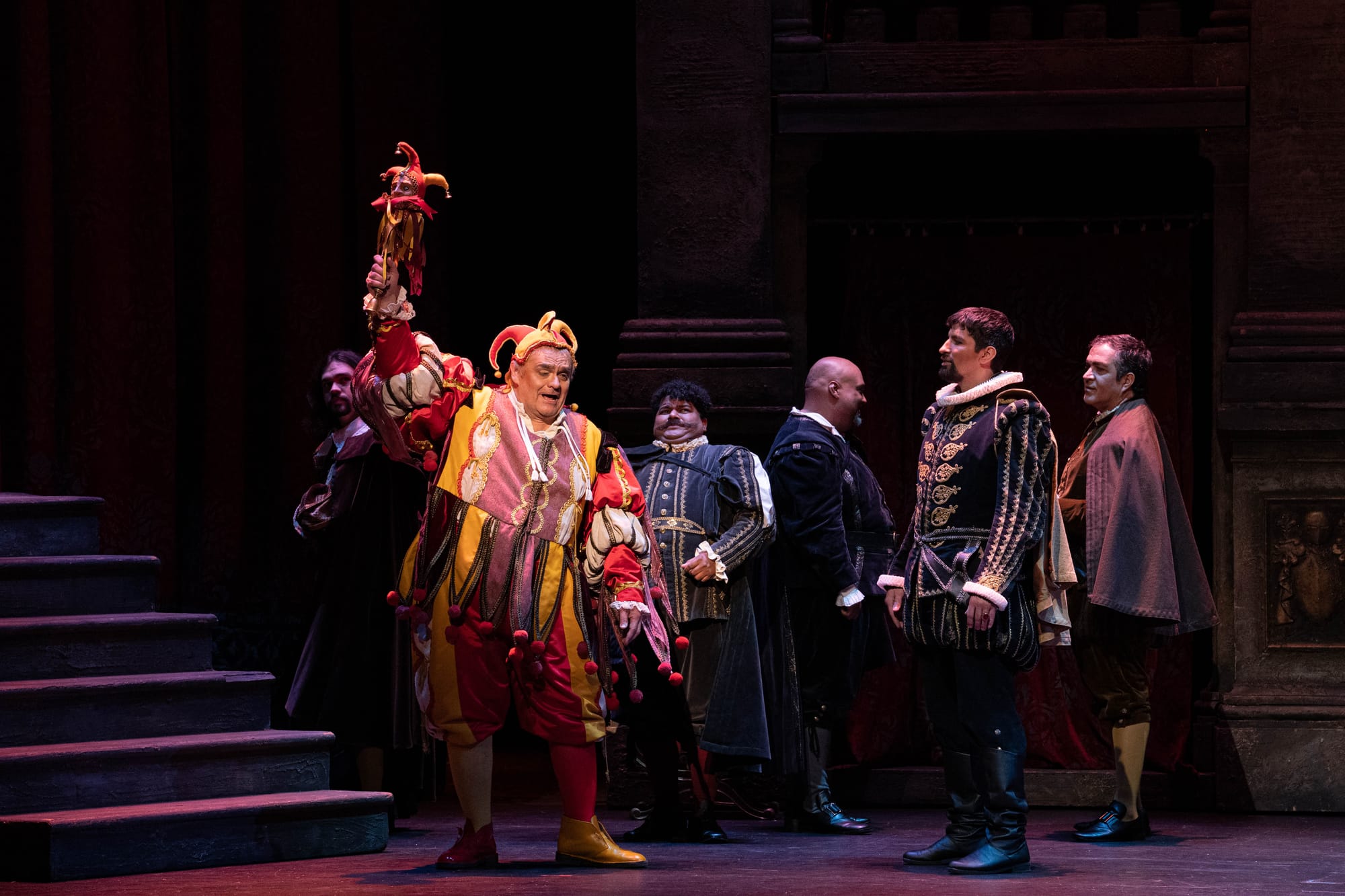
Photo: Florida Grand Opera, CC BY 2.0, via Wikimedia Commons