
The Fourteen Years Brahms Wouldn't Write a Symphony
When Brahms finally premiered his First Symphony in 1876, critics complained it sounded like chamber music. He'd taken them literally as a compliment. For fourteen years, this man had refused to write a symphony, even as the entire genre collapsed under the weight of Beethoven's legacy.

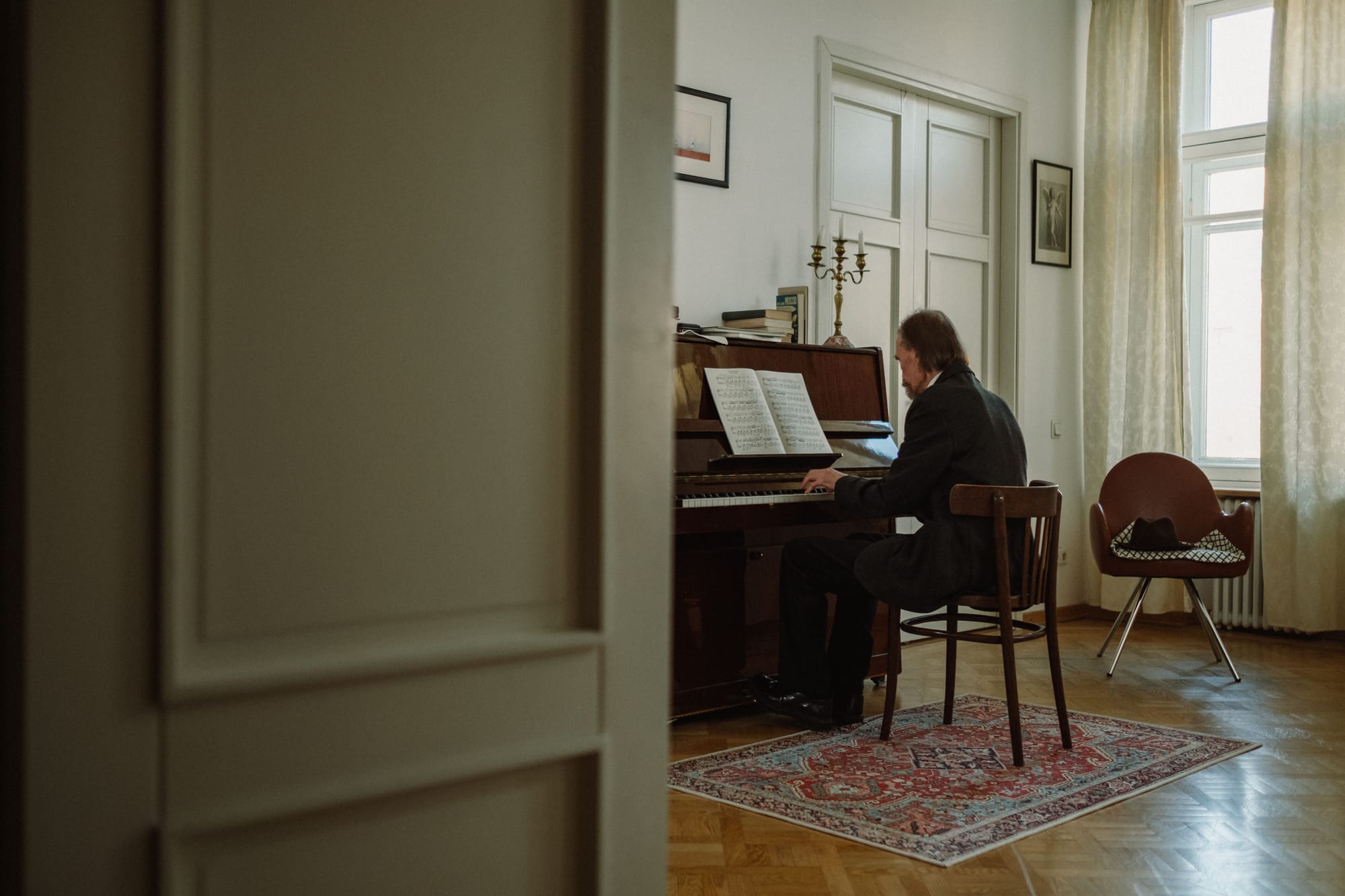
When Brahms finally premiered his First Symphony in 1876, critics complained it sounded like chamber music. He'd taken them literally as a compliment.
For fourteen years, this man had been asked the same question by everyone who mattered: when would he write a symphony? Robert Schumann had called him a genius in waiting. The German musical world wanted him to answer Beethoven. And Brahms kept dodging.
This wasn't cowardice. It was strategic brilliance. Brahms looked at what composers had been trying to do for fifty years since Beethoven died: write something that matched the grandeur, the scale, the public power of the Ninth Symphony. He understood that everyone was losing. The genre itself was in crisis: publishers printed fewer symphonies each decade as composers abandoned the form for smaller works, opera, choral pieces, anything but the symphony. The bar Beethoven had set was so impossibly high that the entire tradition had started to collapse.
Brahms's solution wasn't to leap over it. It was to go around it.
Instead of meeting Beethoven in the concert hall, Brahms retreated into the drawing room. He spent the 1860s writing chamber music: a sextette for strings, piano quartets, a piano quintet, a string quartet. Works on an intimate scale where he could perfect a technique that fascinated him: taking tiny musical fragments, a half-step, a rising arpeggio, and watching them grow into vast structures through what Schoenberg would later call "developing variation." Taking something small, something almost overlooked, and letting it branch and transform until it held the whole weight of the form.
This wasn't music written small because he lacked ambition. It was a laboratory. He was teaching himself how to build large-scale architectural forms using the delicate techniques of chamber writing. How to make something that unfolded with the intimate logic of a conversation rather than the overwhelming mass of an orchestra shouting in unison.
When he finally returned to that C-minor symphony he'd started drafting in 1862, when he finally had the confidence to finish it, the symphony that emerged wasn't a smaller version of Beethoven trying to think big. It was something else entirely. A work of such dense thematic development, such intricate motivic work threading through four movements, that later conductors and critics didn't know what to make of it. They kept saying it sounded like chamber music orchestrated, as if he'd made a mistake by not writing something grander, something more obviously symphonic.
He had. Exactly.
Brahms had taken the crisis of the symphony, the question of how you write in a genre where Beethoven had already said the final word, and solved it by changing what a symphony could be. Not bigger. Deeper. Not louder. More intricate. A work that demanded the same kind of focused, intimate attention you'd give a string quartet, but unfolding across thirty minutes in an orchestra.
It was a gamble that could have failed completely. The Beethoven-worshippers could have dismissed it as academic. But something shifted in the concert halls. Audiences discovered you could give them Beethoven-scale emotion without Beethoven's language. You could hold them in a complex web of ideas that developed with relentless logic and still move them. Within a few years, his other three symphonies followed. Within a generation, Brahms's four symphonies had become the second most-performed symphonic cycle in the world, after Beethoven's own.
The funny part? Even now, people still don't quite know what to do with them. Critics still grumble about the orchestration, about density that can blur on first hearing, about the lack of immediate gratification. They want something more obviously grand. They're still waiting for someone to write the symphony the way it ought to be written.
Brahms learned something that every composer struggling in the shadow of a master should know: the way forward isn't through strength. It's through seeing what everyone else is trying to do, and then doing something so completely different that the old rules stop applying.
Photo by cottonbro studios via Pexels.